

Curious about mixed media but not sure where to start? This project helps you get going with confidence.
I’ll show you how to make a mixed-media card with paper die-cuts. It’s an easy way to add texture, ink, and layers—without overcomplicating it.
I used simple mixed media techniques in combination with a paper die-cut book from DecoTimeCrafts to build a soft, layered card full of detail and depth. This tutorial is for paper crafters who want to explore new techniques without making it too advanced.
Let’s go step by step.
If you prefer to watch the process, click on the video below. If you’d rather read through the steps, just keep scrolling.
Dimensions and Materials
This mixed-media card builds up from a softly inked background to layered paper die cuts and added texture. Here’s what I used—plus some easy alternatives from your stash.
Card size
- White card base: 10.5 by 14.8 centimetres (A6)
- Black Card stock: 10 by 14.3 centimetres
- Background panel white: 9.5 by 13.8 centimetres
Background
- Distress Ink – Peacock Feathers, Chipped Sapphire, Black Soot: Used for blending the background. Try instead: any water-reactive ink in blue tones or even watercolours.
- Blending brush – StudioLightNL: Used for softly blending the Distress Inks. Try instead: You can use a makeup brush or sponge if you don’t have a blending brush.
- Texture paste – Glossy Texture Paste by Ranger: Adds shine and dimension with a stencil. Try instead: gesso, modelling paste, or thick white acrylic paint.
- Stencil – Dutch Doobadoo: Utilised with the paste to create layered interest. Alternative: Any stencil will work. Even leftover cardstock from punches or mesh packaging can be used as a stencil.
- Metallic paint – brand unknown: Applied with a dry brush for a soft shimmer. Alternative: Use any paint, metallic ink, or mica spray, or skip this step for a matte finish.
Stamping
- Clear stamps – circle design, text, and black lines (brands unknown). They add texture and interest to the background. Alternative: Use any background or text stamps, or draw your own doodles with a waterproof pen.
- Memento Ink – Tuxedo Black: This ink is used for stamping crisp black details. Alternative: Any permanent black ink will work well here.
Die Cuts and Layers
- Paper Die-cut Book – DecoTimeCrafts: I used the bird and florals for the focal point. Alternative: Cut elements from patterned paper, old cards, or use digital printables.
- Black cardstock: Used to mat the background panel, creating contrast. Alternative: Any dark-colored cardstock will provide a similar effect.
- Foam tape – brand unknown: Adds dimension behind the focal points. Alternative: Use cardboard scraps or stack die cuts if you run out of foam tape.
- Sentiment – brand unknown: Provides the card with a message. Alternative: Print or stamp your own sentiment or handwrite one.
Mixed media is about experimenting—use what you have and enjoy the process.
Step-by-Step Tutorial – How to Create a Mixed-Media Card with Paper Die-Cuts
If you want to try mixed-media techniques but don’t know where to start, this project helps you begin.
This easy tutorial will guide you through each step, from creating an inked background to layering dimensional paper die cuts.Y
You don’t need fancy tools or a big collection of supplies. I’ll help you use what you already have and show you where to simplify the process.
Let’s break it down into clear steps so you can follow along at your own pace.
Step 1 – Start with stamping on the background
Use clear stamps to create a base layer and add subtle texture to your card. Stamping first helps you create a balanced background before adding inks and die cuts.
Materials needed for this step
- White cardstock panel (9.5 x 13.8 cm)
- Clear stamps: text stamp, circle stamp, striped stamp
- Memento Tuxedo Black ink pad
Preparing Your Background Panel
Cut a piece of white cardstock to 9.5 x 13.8 cm. This is your base for stamping and blending. This will serve as your working surface for stamping and ink blending.
Stamp the text
Stamp a text design with Memento Tuxedo Black ink in the top right, top left, and bottom left corners. This creates visual anchors and adds interest to different areas of the background.
Add circle stamps
Stamp circles randomly across the panel. This adds contrast and shape variation.
Add striped stamps
Add striped stamping in the bottom right and top left corners for balance and contrast.
Let the ink dry
Let the ink dry completely before blending with distress inks.
This beginner-friendly technique builds a textured base for your mixed-media card.
Step 2 – Create a Distress Ink Background with Blending and Splatters
Ink blending adds rich colour and atmosphere to your mixed media background. Three shades are enough to build a soft gradient and set the tone.
Materials needed for this step
- Distress Ink pads: Peacock Feathers, Chipped Sapphire, Black Soot
- Blending brush
- Metallic paint (orange shade)
- Paintbrush
- Water
- Scrap paper or palette for mixing
How to blend your inks
- Start by applying Peacock Feathers at the top of your panel, using circular motions with your blending brush. Allow the colour to fade toward the centre, creating a soft gradient gently.
- Next, blend in Chipped Sapphire on the bottom half of the panel, ensuring it seamlessly merges with the blue-green shade above.
- 3. To add depth, darken the bottom edges with Black Soot. This subtle shading will add dimension and focus to your background.
Adding metallic splatters
Add orange metallic spatters for a hint of shimmer—this ties in with the bird’s colours. Mix your paint with a drop of water, then gently tap your brush to flick small spatters onto the background.”
Let your background dry fully before moving on to texture paste and stencilling.
Step 3 – Add Texture with Paste and a Stencil for Extra Depth
Texture paste is an easy way to add dimension and detail to your background. It’s a simple way to try mixed media and build a layered background.
Materials needed for this step
- Glossy texture paste – I used Ranger’s version.
- Dutch Doobadoo stencil
- Spatula
How to add texture paste
- Place the stencil where you want the pattern to show.
- Spread the paste evenly with your spatula.
- Carefully remove the stencil and let the paste dry completely. It’s ready when it looks clear and glossy.
This step adds a tactile layer that helps your card stand out. It’s an easy way to learn how to build a layered look without feeling stuck.
Step 4 – Choose and Arrange Paper Die Cuts for a Strong Focal Point
Your background’s done, so now it’s time to work with the paper die-cut book from DecoTimeCrafts. Die cuts add layers and detail without needing to colour or cut anything yourself.
Materials needed for this step
- Paper die cuts (birds, flowers, and text) from DecoTimeCrafts
- Foam tape
- Liquid glue
Selecting your die cuts
I chose the two birds on a branch as my focal point. I also picked a separate flower die cut to add dimension and softness. Pick shapes and colours that work well together and match the mood you want.
Arranging your elements
First, place your main image where you want it on the card. I added small squares of foam tape behind the bird and branch to lift them off the background and create subtle depth.
I tucked the flower just above the branch but slightly underneath, for a natural, layered look.
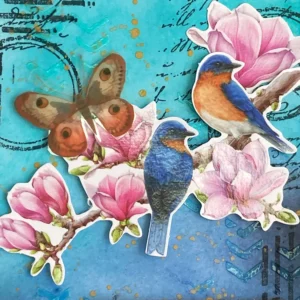
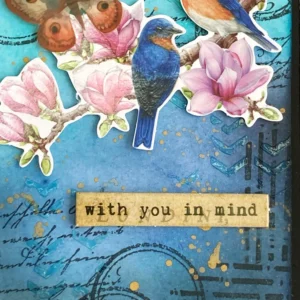
The sentiment was already raised, so I glued it straight onto the background. That keeps the text easy to read and stops it from competing with other layers.
This step shows how to use paper die-cut books to build a layered bird-themed card with less effort.
Step 5 – Assemble and Finish the Mixed Media Card
Now that your elements are ready, bring them together to finish your card. This step adds final layers and accents for balance.
Materials needed for this step
- Black cardstock (10 x 14.3 cm)
- White card base (10.5 x 14.8 cm)
- Glue
- Foam tape or 3D tape
How to assemble your card
- Glue your mixed-media panel onto black cardstock to frame the background and enhance the colours.
- Glue the panel onto a white card base (10.5 x 14.8 cm). Use foam tape to lift die cuts and add dimension.
Final touches
Add extra details like inked edges or paint splatters. These help tie the design together.
This step brings your bird-themed card together with balance and texture.

Let’s Get Creative Together
While I was making this card, the little birds on the branch reminded me of peaceful walks through the woods nearby. The soft blues and greens brought a calm feeling, like a quiet morning outside. It’s interesting how colours and images can spark memories while you’re crafting.
Create your mixed-media card with paper die-cuts using what you already have—swap the birds for butterflies or add your favourite die-cuts.
Here’s what you’ll need to get started:
- White cardstock or base card
- Paper die cuts or images
- Distress inks for blending
- Stamps and texture paste
- Adhesives like glue and foam tape
Got everything ready?
What would you put in the centre—another bird, or maybe a butterfly?
Share your card on Instagram and tag me—I’d love to see what you made.
Which die cut themes do you use most—animals, florals, or quotes?
More Related Blogposts

Mixed Media Card Tutorial – Create A Layered Friendship Card
Another Bird-themed card with mixed media background. This time I used dies to make the die-cuts.
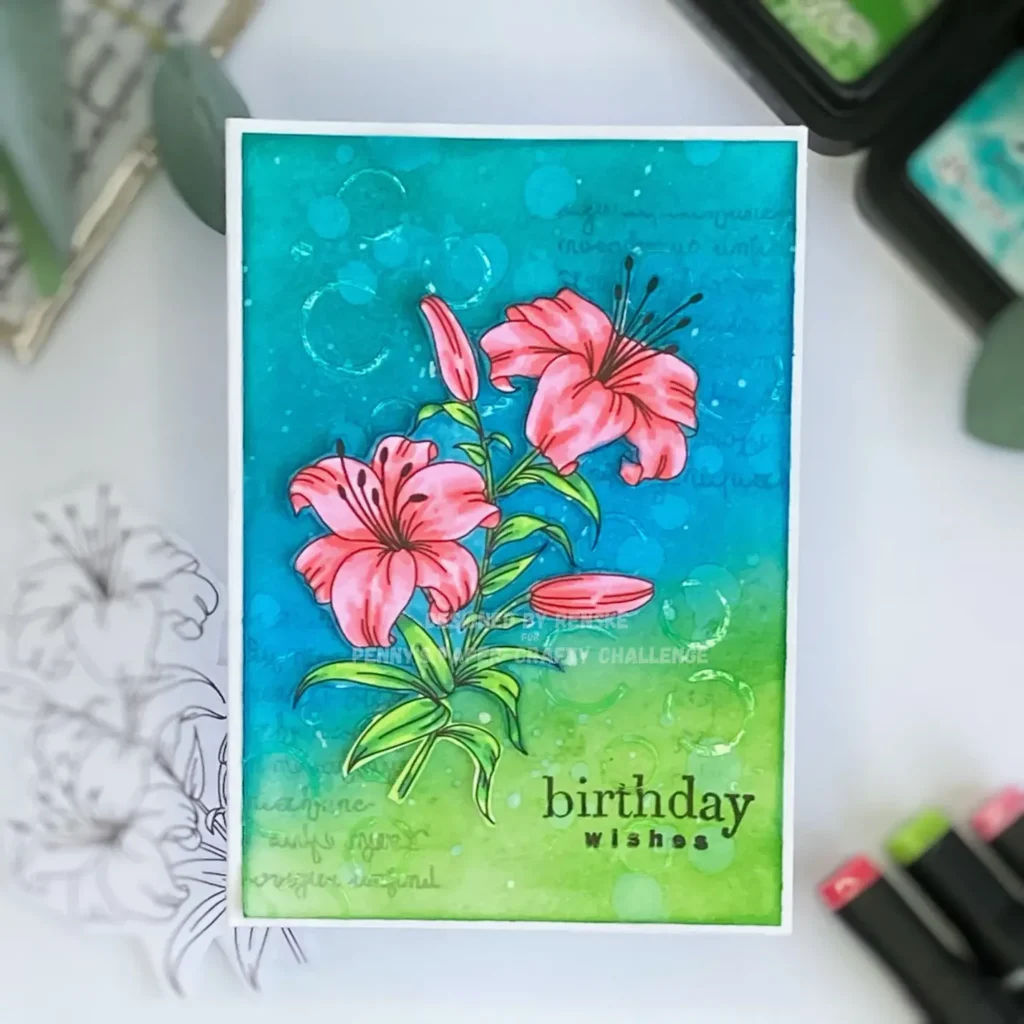
Mixed Media Flower Birthday Card – Easy Step-by-Step Tutoria
Another card with a mixed media background. This time in combination with a digital stamp.
Links of products I used
Here I will link all the products where I have found links, so you can also buy them yourself if you want. Some links are affiliate links. If you buy something through one of these links, I may earn a small commission at no extra cost to you. I only recommend products I use or believe in.
If I haven’t linked a product here, unfortunately, I couldn’t find any shop links.
Products with affiliate links
Distress ink Peacock Feathers

Distress ink Chipped Sapphire

Distress Ink Black Sooth

Memento Tuxedo Black ink

Blending brushes StudiolightNL
I would like to enter my card in the following challenges
- The Paper Shelter: Anything goes
- CREATIVE INSPIRATIONS: Anything goes
- Craft Rocket Challenges: Animals
- Alphabet Challenge Blog: The I is for Ink blending
- Allsorts challenge blog: Animals
- Kaartjes Inspiratie Challenges Blog: Bloemen op je kaart (flowers on your card)
- Lil Patch of Crafty Friends Challenge …: Anything goes
- A Perfect Time To Craft Open Challenge: Anything goes
- Carlin’s Kaartenparadijs: Anything goes
- Crafts Galore Encore Challenge Blog: Anything goes
- Critter Crazy CHALLENGE BLOG: Anything goes + featured critter
- Crafty Animals: Anything goes + must use an animal
I love your stunning ink blending. It makes a fabulous backdrop to your ephemera. Thanks for joining us at The Alphabet Challenge. Love Dawn x
Thank you so much. Glad you like it.
Love the layering & mixed media background, pretty card! Thank you for sharing with us @ the Alphabet Challenge. Tee DT
Thank you so much for your lovely comment